
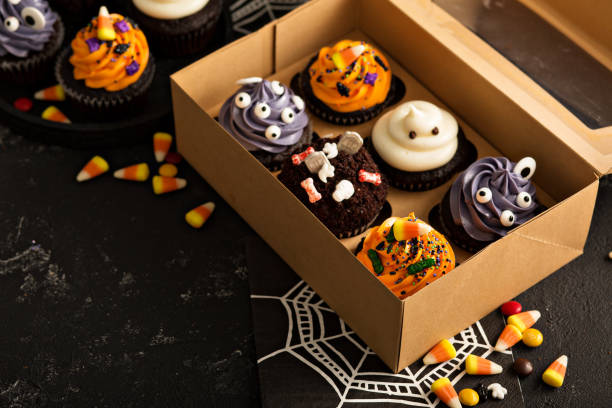
A well-designed Halloween cookie box with a window helps bakeries showcase seasonal treats while protecting decorated cookies during storage, handling, and delivery. For commercial bakeries, confectionery brands, and retail procurement teams, the right packaging must balance product visibility, structural strength, food-contact suitability, and brand presentation.
Choosing between a clear-window paperboard box and a fully enclosed premium box depends on your sales channel, cookie arrangement, shipping conditions, and packaging budget. Window size, paperboard thickness, film performance, and internal inserts all influence the final result.
This guide explains how to select a Halloween cookie box with a window, compare packaging structures, improve stacking performance, and specify materials for wholesale and custom packaging projects.
1. Halloween Cookie Box with Window vs. Fully Enclosed Gift Box
The first step is to match your packaging structure to your target market. Retail customers often want to see the cookies before purchasing, while gift buyers may prioritize premium presentation and an attractive unboxing experience.
| Packaging Feature | Halloween Cookie Box with Window | Fully Enclosed Printed or Foil-Stamped Box |
|---|---|---|
| Primary marketing benefit | Showcases pumpkin, ghost, bat, and other seasonal cookie designs | Creates a premium gift presentation and supports brand storytelling |
| Suitable sales channels | Supermarket bakery aisles, retail displays, local bakeries, and seasonal promotions | E-commerce gift sets, luxury hampers, corporate gifts, and premium confectionery |
| Structural considerations | Window cutouts may reduce panel stiffness and require structural reinforcement | An uninterrupted paperboard panel can provide better structural continuity |
| Artwork options | Combines printed branding with a transparent display area | Offers more continuous space for printing, metallic foil, embossing, and other finishes |
| Packaging requirements | May require a suitable transparent film, secure patching, and grease resistance | May use food-contact-suitable inner liners, greaseproof inserts, or trays |
| Main consideration | Balance cookie visibility with product protection | Balance premium appearance with visibility and material costs |
When Should You Choose a Windowed Cookie Box?
A Halloween cookie box with window works well when the cookies themselves are an important selling point. Customers can see icing details, seasonal colors, decorative shapes, and product assortment before opening the package.
Consider a windowed box when you sell:
- Decorated Halloween sugar cookies featuring pumpkins, ghosts, and bats.
- Assorted cookies for bakery counters and supermarket displays.
- Seasonal treats for gift shops and local retail promotions.
- Custom cookie collections that rely on visual presentation to encourage purchases.
When Is a Fully Enclosed Box the Better Choice?
A fully enclosed box may suit premium gift sets, branded corporate gifts, and e-commerce orders where presentation and external protection take priority.
It also provides more uninterrupted space for brand graphics and premium finishes. However, the final shipping performance still depends on the box construction, board grade, internal cushioning, and outer shipping carton.
For many brands, the best choice comes down to the intended customer experience rather than appearance alone.
2. How to Design a Windowed Halloween Cookie Box for Shipping Protection
A transparent window improves product visibility, but cutting an opening into a paperboard panel changes how the structure distributes loads. Buyers should therefore evaluate window geometry, board specifications, corner support, and the complete packaging configuration before approving a custom design.
2.1 Choose a Suitable Window Size and Reinforcement Structure
A large window can showcase more of the product, but it also removes supporting paperboard from the panel. Under stacking pressure, the remaining structure must transfer loads through the surrounding frame, folds, and corners.
An oversized opening may weaken the lid or cause deformation when the box is stacked. A more balanced design preserves enough material around the window while providing the desired product visibility.
During the design stage, consider the following:
- Perimeter frame: Use a sufficiently wide paperboard border around the window to support the panel and protect its edges.
- Corner strength: Preserve the corners and structural folds that help the box maintain its shape.
- Board specifications: Evaluate paperboard caliper, grade, stiffness, and compression performance together.
- Window dimensions: Avoid removing more material than necessary to display the cookies effectively.
- Distribution conditions: Consider stacking height, storage duration, humidity, handling, and outer-carton protection.
A perimeter frame of approximately 25–30 mm can serve as an initial design reference for some box formats, but it is not a universal minimum. The appropriate width depends on box dimensions, board properties, window placement, and the expected load.
Similarly, moving from 300 GSM to 350 GSM or 400 GSM paperboard may be worth evaluating when additional rigidity is needed. However, GSM measures paperboard grammage, not compression strength directly. Final specifications should be confirmed through structural assessment and packaging tests.
2.2 Compare Window Geometry Before Finalizing the Die Line
The following conceptual comparison illustrates why window size and frame design matter.
| Design Factor | Oversized Window | Balanced Window with Reinforced Frame |
|---|---|---|
| Product visibility | Larger viewing area | Viewing area tailored to cookie arrangement |
| Remaining paperboard | Less material around the opening | More material retained around the panel |
| Structural risk | Potentially greater deformation under load | Better opportunity to preserve panel stiffness |
| Branding space | May reduce available printed area | Leaves room for logos, seasonal graphics, and product details |
| Recommended next step | Review structural performance carefully | Validate the design using samples and load testing |
The goal is not simply to make the window as large as possible. It is to create a window that showcases the cookies without compromising the performance required by the distribution channel.
2.3 Select Food-Contact-Suitable Window Films
A clear window needs to remain transparent and securely attached throughout the intended storage and sales period.
Cookies containing butter, fillings, icing, or other moisture-sensitive ingredients may create conditions that affect the appearance of the window. Condensation, grease transfer, and poor film adhesion can reduce product visibility and weaken the presentation.
When specifying a window patch, consider:
- Material suitability: Evaluate PET or PLA film options for the intended food-contact application.
- Anti-fog performance: Where condensation is a concern, select a film with suitable anti-fog properties.
- Grease resistance: Assess whether the film and surrounding construction can withstand expected exposure to oils.
- Adhesive compatibility: Use an adhesive system suitable for the intended packaging application and food-contact requirements.
- Seal integrity: Confirm that the patch remains securely attached during handling, storage, and transport.
- Environmental conditions: Test the complete package under realistic temperature and humidity conditions.
PET and PLA have different performance characteristics. Neither should automatically be assumed to be anti-fog, greaseproof, or suitable for every food-contact application. Request relevant material documentation and verify compliance with the requirements of your target market.
3. How to Position the Window for Maximum Product Visibility
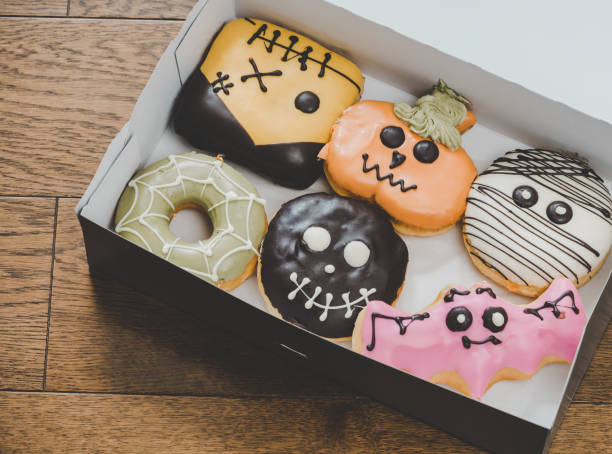
Window placement influences how customers see the cookies on bakery shelves and retail displays. For decorated Halloween cookies, the window should reveal the most visually distinctive features without sacrificing too much space for branding or structural support.
3.1 Align the Window with the Cookie Arrangement
Before creating the box die line, determine how many cookies the package will hold and how they will sit inside the box.
For example, a flat six-cookie assortment may benefit from a broad top window that displays the entire arrangement. A box containing larger decorated cookies may need a different window shape to highlight individual designs.
When planning the layout:
- Arrange the cookies in their intended positions.
- Identify the most attractive decorating details.
- Position the window to showcase those details.
- Leave enough space for the box frame, folds, and printed branding.
- Check product visibility from common shelf and customer viewing angles.
A window covering approximately 50%–60% of the top panel may be a useful starting point for some designs, but the ideal proportion depends on the box format, cookie size, and structural requirements.
3.2 Consider Custom Halloween-Shaped Windows
Custom die-cut windows can reinforce seasonal branding and make packaging more distinctive.
Popular design directions include:
- Pumpkin-shaped windows for classic Halloween cookies.
- Bat-shaped windows for themed assortments.
- Ghost-shaped windows for playful bakery collections.
- Rounded or rectangular windows for mixed cookie sets.
The window shape should complement the cookie arrangement rather than obstruct it. Intricate cutouts also need careful evaluation because narrow paperboard sections may be more vulnerable to tearing or deformation.
For retail point-of-purchase displays, a window that extends toward the front-facing panel may improve visibility from different viewing angles. Before adopting this structure, check whether the extended opening affects the lid, front panel, or stacking performance.
3.3 Balance the Window with Branding Space
A transparent window reduces the printable paperboard area, but it does not eliminate branding opportunities.
Use the remaining surface for your logo, seasonal illustrations, product information, and promotional messaging. For premium collections, consider foil stamping, embossing, or other finishes that complement the visible cookies.
The final design should create a clear visual hierarchy: customers should notice the cookies first, recognize the brand easily, and understand the product offering without unnecessary visual clutter.
4. How to Choose the Right Size for Wholesale Halloween Cookie Boxes
The ideal dimensions depend on cookie diameter, thickness, decoration, quantity, and internal arrangement. A box that fits the cookies too tightly may damage icing or decorative details, while excessive empty space can allow products to shift during transport.
The following dimensions are illustrative starting points, not universal standard sizes. Confirm internal dimensions and fit through physical samples before placing a bulk order.
| Packaging Format | Example Dimensions (L × W × H) | Potential Application | Key Design Consideration |
|---|---|---|---|
| Single or twin cookie box | 10 × 10 × 3 cm | One large decorated cookie or two smaller cookies | Allow clearance for icing and decorative toppings |
| Six-cookie flat box | 22 × 15 × 5 cm | A flat assortment of six cookies | Use a suitable tray or dividers to prevent contact |
| Twelve-cookie deep box | 24 × 18 × 8 cm | A larger assortment or thicker cookies | Check vertical clearance and internal separation |
What Should Buyers Confirm Before Approving Dimensions?
For a custom Halloween cookie box with a window, provide your packaging supplier with:
- Cookie dimensions, including the height of icing and decorations.
- Required cookie quantity and arrangement.
- Whether cookies need individual compartments.
- Desired window size and placement.
- Storage, delivery, and stacking requirements.
- Branding artwork, finish preferences, and target order quantity.
A custom insert or divider can help keep cookies organized and reduce movement. For decorated products, verify that the insert does not press against delicate icing or allow cookies to collide during transport.
5. B2B Procurement FAQs
Q1. Do Halloween cookie boxes with windows collapse more easily during shipping?
They can be more vulnerable to deformation if the window removes too much supporting paperboard or if the box is poorly designed. However, windowed packaging can still provide suitable protection when its structure matches the expected load and distribution conditions.
Evaluate the window opening, perimeter frame, board grade, box dimensions, and outer-carton configuration together. Do not rely on GSM alone to predict compression performance. Request a sample and conduct appropriate stacking or compression tests before approving mass production.
Q2. What paperboard thickness is suitable for a wholesale Halloween cookie box?
There is no single thickness that works for every cookie box. The required specification depends on box size, board grade, window dimensions, cookie weight, stacking conditions, and delivery method.
Paperboard in the 300–400 GSM range can be considered during initial design discussions, but the final choice should be based on the supplier’s material specifications and actual packaging performance. A higher grammage does not automatically guarantee better compression strength.
Q3. Which materials are suitable for transparent cookie box windows?
PET and PLA are potential window-film options, depending on the packaging design and application requirements. Buyers should confirm transparency, anti-fog performance where needed, grease resistance, patch adhesion, and food-contact suitability.
Request documentation for the exact material and intended use. Do not assume that all PET or PLA films provide the same barrier properties or meet the same regulatory requirements.
Q4. Where should the window be placed on a Halloween cookie box?
A top-panel window is a practical option for showcasing a flat cookie assortment. A window covering around 50%–60% of the panel can be evaluated as an initial design reference, but the appropriate size varies by box geometry and structural requirements.
Position the window to reveal the most attractive cookie details while retaining enough paperboard for structural support and branding. For retail displays, consider whether a front-facing or extended window would improve visibility.
Q5. Can I customize the size, window shape, and inserts for bulk orders?
Yes. Custom packaging can be developed around your cookie dimensions, product quantity, brand identity, and sales channel. Options may include custom box sizes, rectangular or themed die-cut windows, printed artwork, premium finishes, and internal trays or dividers.
Before production, review the dieline, material specifications, printed sample, and assembled box. This process helps confirm product fit, window alignment, appearance, and handling performance.
6. Key Takeaways for Halloween Cookie Box Buyers
When sourcing a Halloween cookie box with window, evaluate the complete packaging system rather than focusing on appearance alone.
- Match the box to your sales channel: Windowed boxes suit products that benefit from visual merchandising, while fully enclosed boxes can support premium gift presentation.
- Balance visibility with structural integrity: Select a suitable window size and preserve enough supporting paperboard around the opening.
- Choose materials based on actual requirements: Evaluate board grade, caliper, film properties, adhesive compatibility, and food-contact documentation.
- Design around the cookies: Confirm internal dimensions, clearance for decorations, and the need for trays or dividers.
- Test before bulk production: Use physical samples to assess fit, appearance, stacking performance, and shipping suitability.
Develop Your Custom Halloween Cookie Box with Window
The right seasonal packaging combines product visibility, dependable protection, and distinctive branding. A well-planned structure can help bakeries and confectionery brands present Halloween cookies attractively while meeting the practical requirements of retail distribution and gift packaging.
Looking for a packaging solution tailored to your seasonal product line? Share your cookie dimensions, quantity, preferred window design, material requirements, and branding artwork with our team. We can help you evaluate custom box structures, printing options, inserts, and suitable material specifications for your project.
Contact us to discuss your custom Halloween cookie box with a window and request a wholesale packaging quote.