
Rigid boxes and folding cartons are the two most common premium packaging formats. They look similar in photos but are manufactured completely differently – and the difference shows in cost, durability, and the unboxing experience.
What is a rigid box?
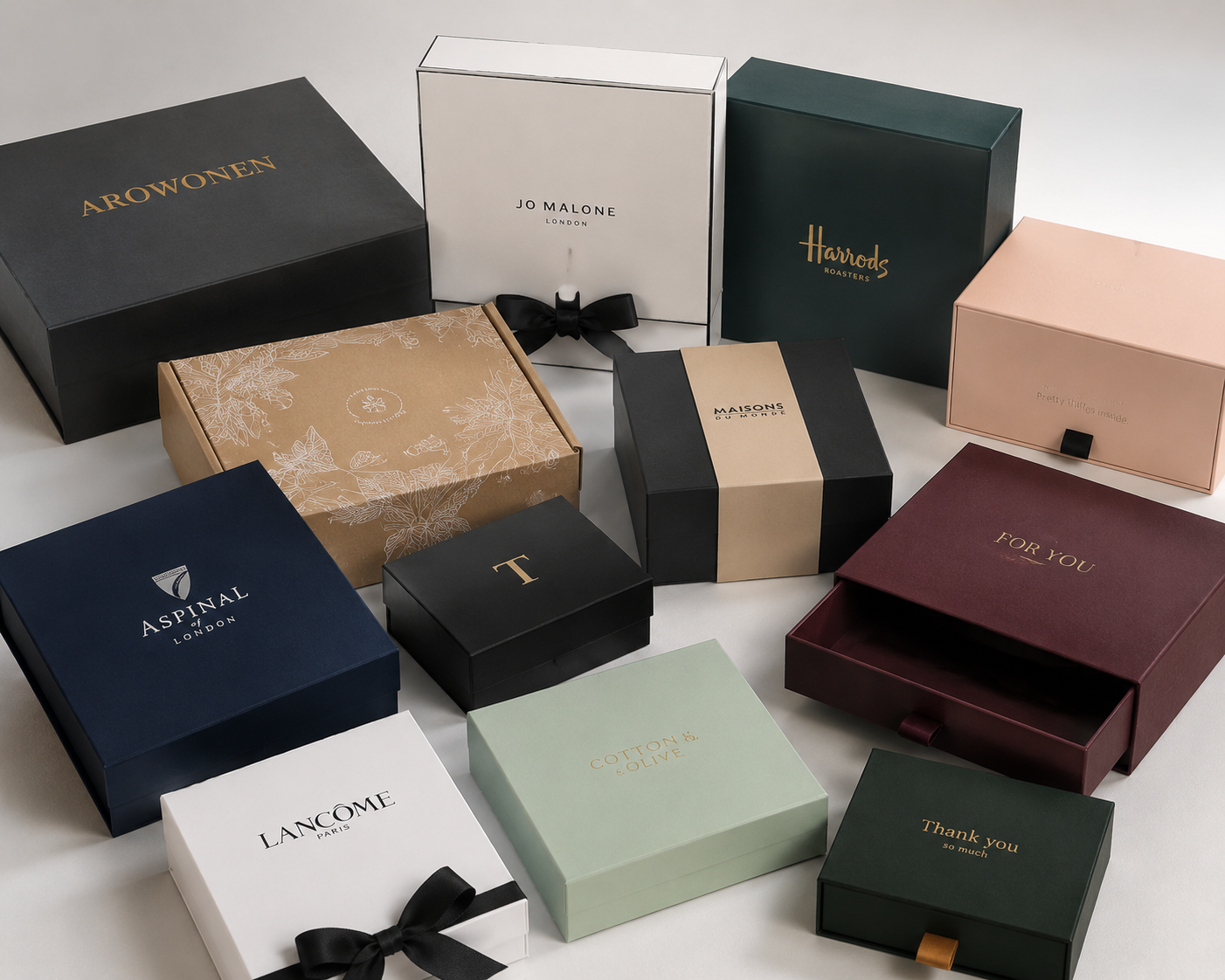
A rigid box is assembled from thick greyboard, wrapped in printed paper. It cannot be folded flat. It has real weight and structure – the box you lift a phone or a watch out of. Rigid boxes are made by hand or on semi-automatic wrapping lines and are the standard for luxury gifting, electronics and cosmetics.
What is a folding carton?
A folding carton is printed on paperboard, die-cut and folded flat for shipping. It is lighter, more economical, and far easier to store and transport. Most retail food packaging, cosmetics, and pharmaceutical cartons are folding cartons.
The real differences
- Construction: rigid boxes are wrapped board; folding cartons are creased and folded from a single sheet.
- Cost: rigid boxes cost several times more per unit, mainly due to materials and assembly labor.
- Shipping: folding cartons ship flat and cheaply; rigid boxes ship assembled and bulky.
- Feel: nothing matches the perceived value of a rigid box.
How to decide
If the packaging is part of the product experience – gifting, luxury retail, premium cosmetics – choose rigid. If you need volume, stackability, and logistics efficiency, choose folding cartons. Many YMBOX customers combine both: a folding carton inner with a rigid presentation outer for seasonal sets.
Both formats run through the same factory in Dongguan, with in-house printing, die-cutting, and finishing. Send us your product details, and we will quote both options.